 Phone : +974 44420050

 Doha, Qatar





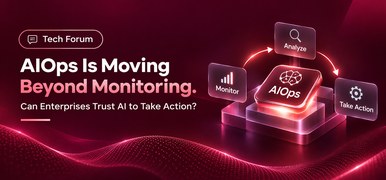
For years, IT operations teams have relied on monitoring tools to identify system failures, investigate alerts and respond to incidents. But AIOps is evolving beyond simply detecting problems.
AI agents are beginning to support more advanced IT operations activities, including incident investigation, alert correlation, change validation and automated remediation.
This shift could help organisations reduce manual workloads, respond to incidents faster and manage increasingly complex IT environments.
Gartner's October 26, 2026 announcement on its top AI trends in infrastructure and IT operations for 2027 highlights the growing role of AI agents in automating operational tasks, including incident triage, change validation and remediation.
However, greater automation also introduces important questions. What happens when an AI agent makes the wrong decision? How much control should IT teams retain? And which operational tasks are safe to automate?
For enterprises, adopting AIOps is not simply about introducing more automation. It is about establishing the right balance between AI-driven decisions, operational visibility and human oversight.
Let's discuss:
- Would you allow AI agents to resolve IT incidents without human approval?
- Which IT operations activities should be automated first?
- How can organisations maintain accountability when AI takes operational action?
Where should enterprises draw the line between AI-driven automation and human control in IT operations?




 Celebrating Excellence: Mr. Syed Rizwan ...