 Phone : +974 44420050

 Doha, Qatar





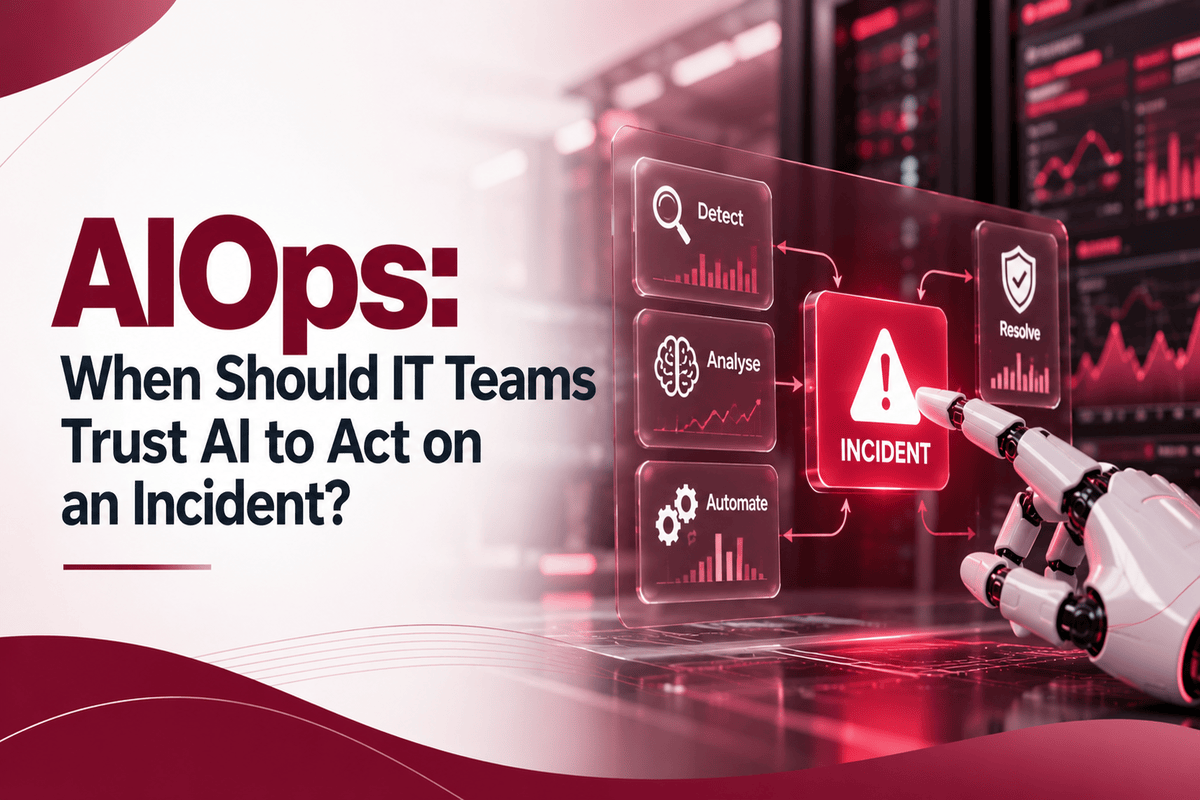
IT operations teams deal with thousands of alerts, recurring incidents and increasingly complex infrastructure. AIOps can help identify anomalies, correlate related alerts and recommend corrective actions before minor issues become major disruptions.
But detecting a problem and deciding how to resolve it are two different responsibilities.
An AI system might identify unusual network behaviour or a recurring application failure. Automatically restarting a service or changing a configuration, however, could create further disruption if the underlying cause has not been understood.
This raises an important operational question: how much autonomy should AIOps have in managing enterprise IT environments?
Consider three approaches:
Detection only: AI identifies anomalies and alerts the operations team.
Assisted resolution: AI recommends corrective actions for an engineer to approve.
Automated remediation: AI executes predefined or approved actions within established safeguards.
Each approach offers a different balance between response speed, operational efficiency and risk.
For organizations adopting AIOps, where should the boundary sit between AI recommendations and autonomous action?
Should routine incidents be resolved automatically, or should human approval remain mandatory for changes to production systems?





 Celebrating Excellence: Mr. Syed Rizwan ...