 Phone : +974 44420050

 Doha, Qatar





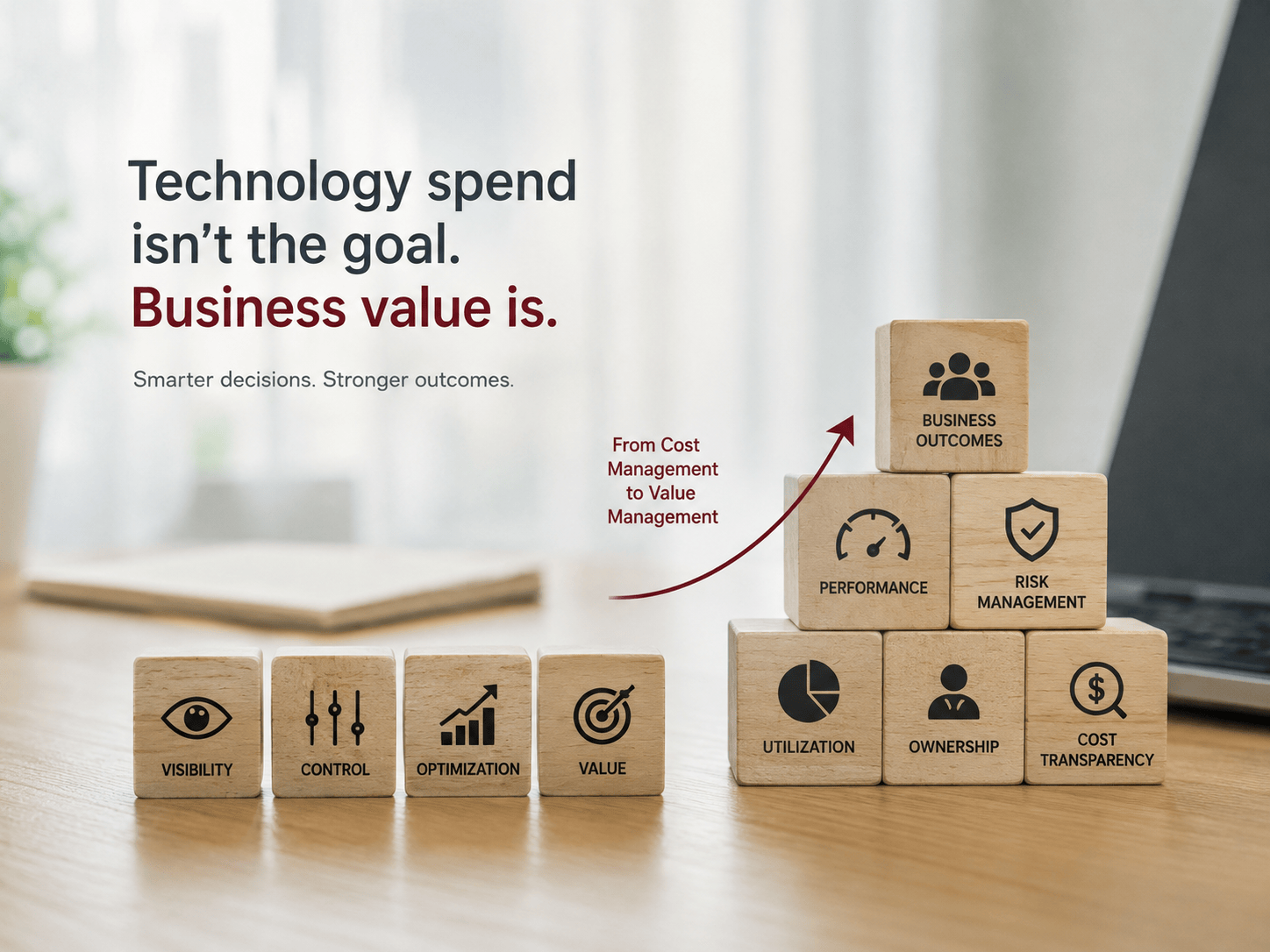
A monthly cost report can tell you exactly what the organization spent on technology last month. What it usually cannot tell you is whether that spending was directed toward the right priorities.
As technology portfolios expand across infrastructure, cloud, SaaS, data platforms, and increasingly AI, the gap between what was spent and what it delivered has become a CIO level concern.
FinOps is the operating discipline that brings financial accountability to variable technology spending by bringing engineering, finance, and business teams together around the same data, rather than reconciling separate spreadsheets after the fact.
It has traditionally focused on cloud costs, but that focus is widening.
The FinOps Foundation's 2026 Framework introduced Executive Strategy Alignment as a new capability. It connects technology spending, usage, and adoption with business strategy, helping leaders compare options, make trade offs, and manage investment based on value.
The framework also expands FinOps beyond public cloud to areas including SaaS, data centers, data cloud platforms, and AI.
Together, these developments show how FinOps is evolving from a reporting function into a decision support discipline.
Reducing technology spending can appear to be an obvious success, but the number alone does not explain what was reduced.
Removing unused capacity or consolidating duplicate tools can create genuine savings. However, reducing capacity that a growing business will need, removing a security control, or delaying necessary modernization can also lower costs while increasing risk elsewhere.
The difference becomes visible when technology costs are evaluated alongside performance, risk, and business outcomes.
A technology value approach brings together spending, utilization, business ownership, service performance, risk, and expected outcomes.
This information can help CIOs consider these factors earlier when making architecture decisions, planning modernization, or evaluating build versus buy options.
Instead of asking only:
"Where can we cut?"
CIOs can ask:
"Where should we invest?"
"What should we consolidate?"
"Which option delivers the strongest business outcome for the trade off involved?"
Technology cost management works best when it is treated as a value discipline, not simply a cost reduction exercise.
As technology portfolios become more diverse, CIOs need to understand not only how much they are spending, but what that spending is delivering for the business.
The goal is to connect technology investment to business outcomes, not simply to a budget line.


 Celebrating Excellence: Mr. Syed Rizwan ...