 Phone : +974 44420050

 Doha, Qatar





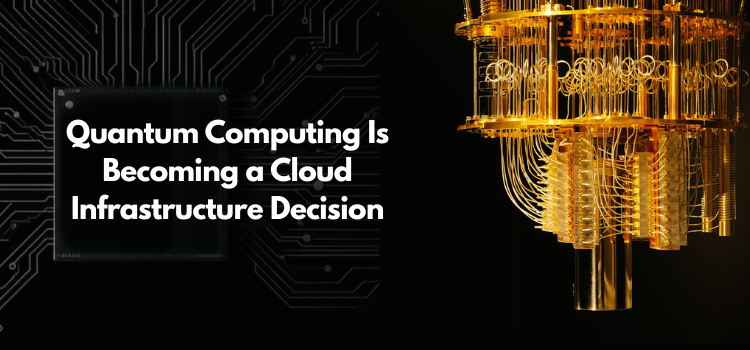
For enterprise technology leaders, the significance is less about quantum computing suddenly becoming mainstream and more about how organizations may begin accessing it.
Instead of treating quantum computing as a specialized infrastructure project requiring dedicated hardware and facilities, the Oracle and Quantinuum model places quantum resources closer to the cloud environments enterprises already use.
Quantinuum's Helios is a third-generation, 98-physical-qubit trapped-ion quantum computer that was commercially launched in November 2025. Quantinuum says Helios has achieved an average two-qubit gate fidelity of 99.921% and has been used in demonstrations involving 48 logical qubits.
Under the Oracle partnership, Helios is planned to operate within an OCI AI data center. Customers are expected to access the system through an OCI quantum service without needing to procure, install or operate dedicated quantum hardware themselves.
Oracle says the planned service will combine Quantinuum's development stack with support for open-source hybrid programming frameworks, allowing developers to move from simulation toward execution on real quantum hardware within the OCI environment.
That makes the development model particularly interesting for enterprise IT teams.
Quantum computing starts to look less like an isolated technology experiment and more like another specialized computing resource that can sit alongside existing cloud, GPU and HPC infrastructure.
Neither Oracle nor Quantinuum is positioning quantum computing as a replacement for conventional infrastructure.
The partnership focuses on hybrid quantum-AI-HPC workloads, with potential applications including drug discovery, materials science, financial modeling, logistics, energy and large-scale optimization.
The underlying model is relatively straightforward:
Classical computing handles what it already does well. AI and GPUs handle AI-intensive workloads. HPC provides large-scale computational capacity. Quantum resources can be introduced where particular problems may benefit from them.
That creates a different adoption path from replacing existing infrastructure with quantum systems.
It also gives technology leaders a reason to start thinking about quantum readiness without treating it as an immediate replacement project.
The announcement does not establish that quantum computing has achieved a broad commercial advantage over classical computing.
The potential benefits remain highly dependent on the type of problem, algorithm and workload involved.
The immediate development is more practical: quantum computing is being packaged into an enterprise cloud environment where organizations can potentially experiment with it using infrastructure and governance models they already understand.
Oracle says Helios is expected to integrate with OCI compute, networking, storage, identity and data services under existing governance and access controls.
That integration may ultimately be just as important for enterprise adoption as the underlying quantum hardware.
For technology leaders tracking quantum computing, the near-term question may not be:
“When should we buy a quantum computer?”
It may be:
“How would quantum computing fit into our existing technology environment if a relevant use case emerges?”
That leads to several practical areas worth watching:
Workload identification
Identify computational problems involving optimization, simulation or other areas where quantum approaches are being actively explored.
Cloud access models
Watch how quantum resources are exposed, consumed and integrated with existing cloud infrastructure.
Security and governance
Understand how identity, access, data and workload governance are handled when quantum resources become part of an enterprise cloud environment.
Hybrid architecture
Consider how quantum resources could eventually interact with existing AI, GPU and HPC environments rather than viewing them as standalone systems.
Business-case development
Separate genuine use cases from experimentation and technology hype. Access to quantum hardware does not automatically create business value.
The next stage will be particularly important.
Oracle's planned OCI quantum service will show how quantum computing performs when packaged as an enterprise cloud capability rather than a standalone research environment. The real test will be how easily organizations can experiment, integrate workloads and evaluate whether a quantum approach provides meaningful value for specific problems.
The energy dimension is also worth monitoring. Oracle and Quantinuum state that a Helios system has an estimated power draw of less than one percent of the power reported for leading supercomputers. This is a company-cited comparison for the specific Helios system, rather than evidence that quantum computing broadly is more energy efficient for all workloads.
The significance of this partnership is not that enterprises suddenly need quantum computers.
It is that quantum computing is beginning to appear within infrastructure models enterprises already understand: cloud access, managed services, existing compute environments and familiar governance controls.
For technology leaders, the immediate opportunity is not to rush into adoption. It is to understand where quantum could eventually complement AI and HPC workloads, what infrastructure changes that could require, and how security and governance would need to evolve alongside it.
The organizations that prepare early may not be the ones buying quantum hardware first. They may simply be the ones that understand where it could fit when the right business case emerges.


 Celebrating Excellence: Mr. Syed Rizwan ...